
The 'Latte Factor' is Dead: Why Cutting Small Habits Doesn't Build Wealth
Stop agonizing over daily coffee and learn why negotiating your fixed expenses yields ten times the return of micro-frugality.

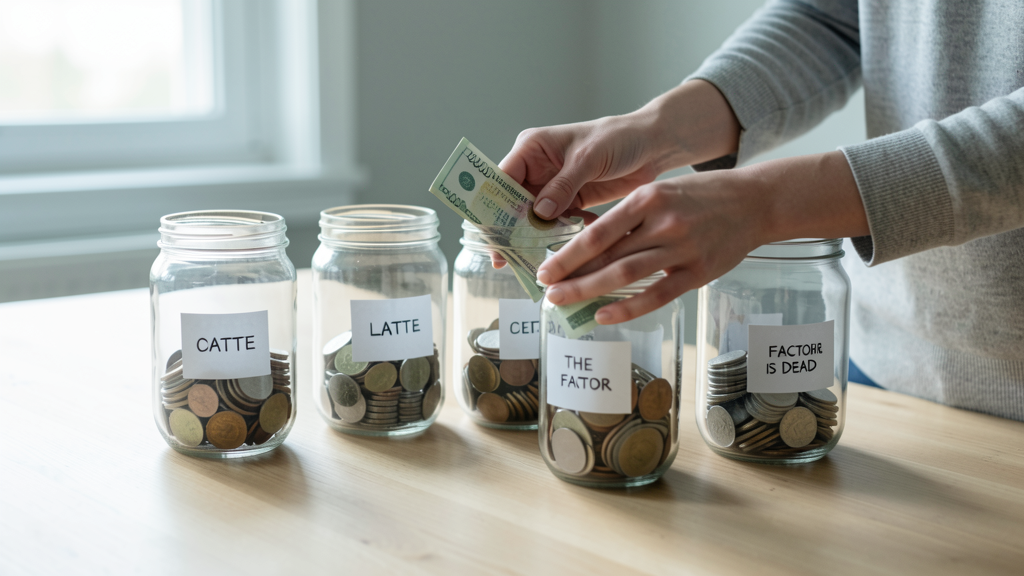
For two decades, personal finance gurus have peddled a convenient lie: that the reason you aren't wealthy is your morning caffeine fix. They call it the "Latte Factor," a seductive theory suggesting that the small, daily pleasures we enjoy are the leak sinking our financial ships. In 2026, this narrative isn't just outdated; it is actively harmful. It shifts the burden of systemic economic pressure onto the individual's willpower, ignoring the mathematical reality of where our money actually goes.
I have analyzed thousands of bank statements as a banking analyst, and I rarely see a lifestyle ruined by pastries. I see budgets destroyed by stagnant wages, soaring housing costs, and fixed expenses that are never audited. Wasting mental energy agonizing over a $6.50 flat white while ignoring a $200 annual overcharge on insurance is bad math. It is time to bury the micro-saving narrative and focus on the high-leverage moves that actually move the needle.
Myth: Your morning coffee is the primary leak in your budget
The most persistent myth in personal finance is that cutting small discretionary spending is the fastest route to solvency. Proponents of this view will show you a compound interest calculator claiming that skipping a $7 coffee every day will make you a millionaire in 40 years. This is technically true but practically useless.
If you invest $7 daily at an 8% return, you might have a nice nest egg eventually. However, this approach assumes that your willpower is infinite and that the quality of your life has no value. In 2026, where remote work and digital isolation are rampant, that small interaction with a barista or the moment of calm with a warm cup might be the only luxury you afford yourself. Stripping it away creates a "scarcity mindset" that often leads to binge spending later.
More importantly, the math is underwhelming. Saving $7 a day yields roughly $2,555 a year. That is a respectable emergency fund, yes, but it is rarely life-changing for someone drowning in high-interest debt or unable to save for a down payment. It is a drop in the bucket compared to the fixed costs draining your accounts. You cannot out-save a bloated housing cost or an inflated car payment by drinking tap water.
Reality: Negotiating fixed bills offers higher ROI for your time
If you truly want to build wealth, you must stop picking up pennies in the street and start looking at the dollars flying out the window. The return on investment (ROI) for skipping a coffee is 100% of that $7, but the ROI for a one-hour phone call to renegotiate your insurance or internet bill can be thousands of percent.
Consider your auto insurance. Most people set their policy and forget it. Yet, insurance algorithms change constantly. If you haven't shopped around recently, you are likely overpaying not because of your driving record, but because of your location.

There is a reason why The 'Zip Code' Hack: Why Location Affects Your Insurance Rates More Than Your Driving Record is one of the most-read strategies here at Finnnest. A 15-minute audit of your location-based premiums can often save you $50 to $100 a month. That is the equivalent of skipping 7 to 14 coffees, secured with a fraction of the sustained effort. When you focus on high-impact fixed bills, you save money once, and the savings recur every month automatically without you having to say "no" to yourself every morning.
Myth: Frugality is purely about spending less
Another dangerous misconception is that being "good with money" means being a miser who buys the cheapest version of everything. This is a rookie mistake. I have seen clients ruin their finances by buying cheap tools that break twice as fast, cheap shoes that hurt their feet, and cheap food that wrecks their health.
This isn't just about comfort; it is about arithmetic. Buying a $30 pair of work shoes that fall apart in three months costs you $120 a year. Buying a $120 pair that lasts three years costs you $40 a year. The "frugal" choice was actually the expensive one.
This nuance is entirely lost when you obsess over the Latte Factor. It blinds you to the actual cost-per-use of the items in your life. There are specific scenarios where the premium price tag is actually the savings account entry. We break this down in our analysis of 4 Times Buying Generic is Actually More Expensive Than Brand Name. True frugality is about value maximization, not price minimization. It requires thinking, not just reflexively grabbing the lowest price tag.
Reality: Subscription fatigue is the silent wealth killer
While we are busy shaming ourselves for buying a sandwich, a much more insidious drain is occurring in the background: the recurring fixed cost. In the early 2020s, the shift to subscription models for everything from software to toothbrushes exploded. In 2026, the average household carries significantly more recurring monthly charges than they realize.
These are dangerous because they are designed to be frictionless. You sign up for a free trial of a streaming service for a month, forget to cancel, and three years later you have paid $400 for a service you watch twice annually. Multiply this by music streaming, cloud storage, box subscriptions, and digital newsstand fees, and you are easily leaking $150 to $300 a month.
This is where the "Latte Factor" distraction becomes dangerous. A person who feels proud of skipping a $5 latte might ignore three $15 subscription fees because they are automated and "invisible." The fix requires a ruthless audit. We recommend Conducting an Annual Subscription Audit to Reclaim $600/Year as a non-negotiable task. This is a single afternoon of work that can yield a guaranteed monthly cash flow increase, dwarfing the impact of any daily austerity measure.
The psychological toll of penny-pinching
Beyond the math, there is a human cost to the micro-saving narrative that experts often ignore. Constant vigilance over minor spending induces financial anxiety. When you condition yourself to view every small purchase as a failure, you begin to resent the very act of managing your money.
This leads to "budget fatigue." You stick to your restrictive, joyless budget for two months, then snap and buy a $600 gadget you don't need because you feel deprived. It is a cycle of restriction and bingeing that is remarkably similar to crash dieting.
Conversely, when you optimize your large fixed costs—negotiating your rent, refinancing high-interest debt, or cutting unused subscriptions—you free up cash flow without sacrificing your daily quality of life. You can buy the latte guilt-free because you know your housing and insurance costs are optimized. You are treating the disease (structural inefficiency) rather than the symptoms (minor discretionary spending).
Stop counting the beans, start moving the jars
The "Latte Factor" survives because it is easy advice. It is much easier to tell someone to stop drinking coffee than it is to explain how to dispute a property tax assessment or refinance an auto loan. But easy advice rarely builds significant wealth.
If you are looking at your bank account and wondering where the money went, stop looking at the $10 lunch receipts. Look at the $1,200 rent increase you just accepted without a fight. Look at the $200 a month you are paying for high-speed internet when a competitor offers a slower—yet sufficient—tier for $50.
Wealth is not built by depriving yourself of small joys. It is built by ensuring the massive fixed costs that support your life are as efficient as possible. Make the big calls, do the hard audits, and then go enjoy that coffee. You will have earned it.
Read next

The Zip Code Lottery: How Moving 5 Miles Can Slash Your Auto Premium
Discover how insurance carriers use geographic rating factors to determine your risk profile and why a relocation across town might save you hundreds annually.

The $600 Recovery Protocol: Audit Your Subscriptions Like a Forensic Accountant
Stop letting small fees compound into a major loss. Here is the exact forensic process I use to hunt down forgotten digital services and reclaim $600 annually.