
How I 'Tricked' Myself into Saving $400/Month by Renaming My Bank Accounts
A behavioral psychology experiment that stopped me from raiding my savings by changing just one word in my banking app.

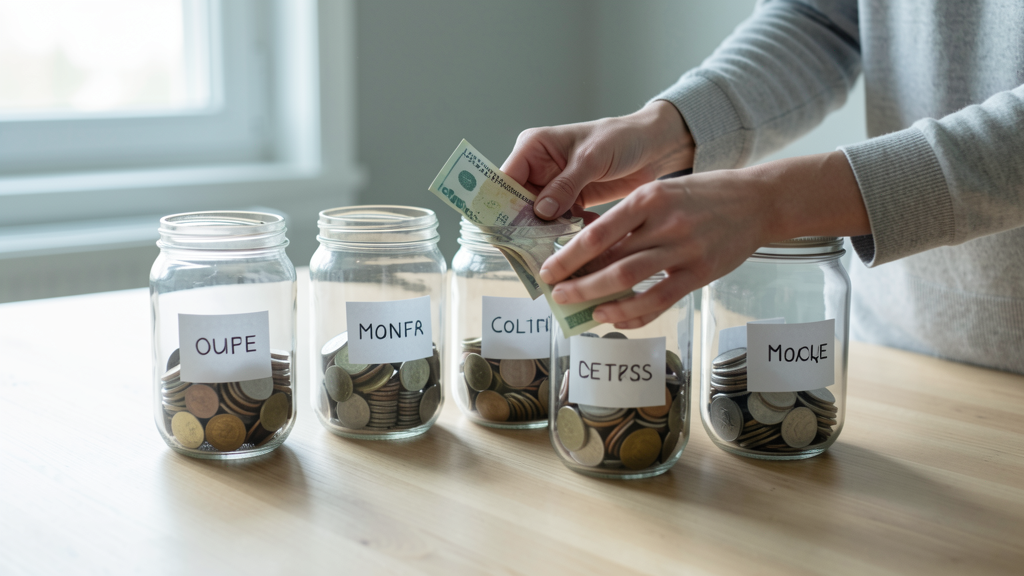
I admit it. I used to be the person who treated a high-yield savings account like a waiting room for money I intended to spend on clothing. Every time I checked my balance, I saw a lump sum that felt available, even though I had intellectually labeled it "savings." In the first quarter of 2025, I managed to transfer money out of my savings account four separate times. The reasons ranged from a spontaneous concert ticket to a dinner that was slightly too fancy for a Tuesday.
The worst part wasn't the spending itself; it was the ease of the transaction. With two taps on my phone, I had bridged the gap between my future self and my current self's impulsive desires. I needed to stop treating my savings as a liquid asset and start treating it as a locked box. I didn't need a higher interest rate or a new app with gamified badges. I needed to change the narrative I told myself every time I logged in.
The "Ping" That Was Draining My Future
The specific breaking point arrived on February 14, 2026. I was staring at a notification from my bank: "Low Balance Alert." My checking account was hovering dangerously close to zero because I had just paid my car insurance premium. Instinctively, my thumb hovered over the "Transfer" button in my app to pull $500 from my "Emergency Fund." I wasn't facing an emergency; I was facing a cash flow management issue.
The ease of that transfer was the problem. Psychologically, the label "Emergency Fund" was too abstract. When I wanted money, my brain would rationalize almost any inconvenience as an emergency to justify the transfer. A friend’s birthday gift became an "emergency" to avoid looking cheap. A sale on a new laptop became an "emergency" because my current one was "slow."
I realized that my financial architecture was flawed. I had built a system where saving was the hard part, but spending was the easy part. I needed to invert that friction. I needed to make the act of spending saved money feel like a bureaucratic nightmare or a moral failure.
Why "Savings" Is a Dangerous Word
The term "savings" is emotionally neutral. It implies accumulation, but it doesn't specify purpose. In behavioral economics, this is known as mental accounting. We treat money differently depending on how we label it. If I have $1,000 in my wallet and $1,000 in the bank, I might spend the wallet money freely but hoard the bank money. However, if the bank money is just labeled "Savings," it remains a vague pot of potential happiness.
When I looked at my accounts, I saw "Checking" and "Savings." To my impulsive brain, "Savings" just meant "Checking Part 2." It was surplus. It was permission.
I had read about the concept of friction in spending habits. Physical cash creates friction because you have to hand it over. Credit cards reduce friction because you just swipe. Digital transfers remove almost all friction. Since I wasn't ready to go back to stuffing envelopes with cash—a method that has merit but feels outdated for someone whose life is digitized—I decided to introduce friction through language. I needed to rename my accounts to lie to my limbic system.
My Friday Night Ritual of Deception
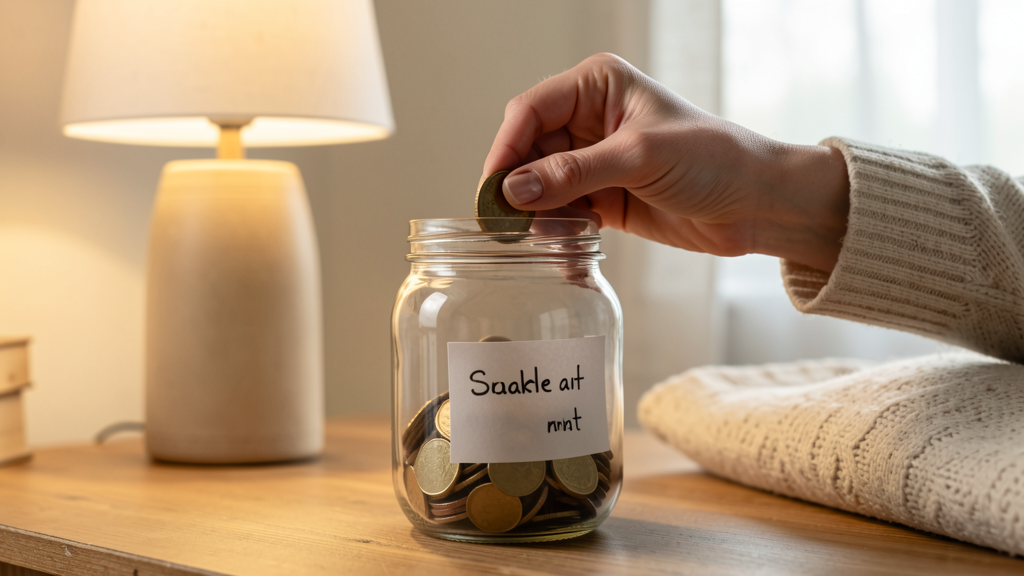
On a Friday night in late February, instead of going out, I sat on my couch with a glass of wine and opened my banking app. I created four new sub-savings accounts. I didn't name them boring things like "Car Fund" or "Vacation." I got specific. I got aggressive. I used language that would shame me if I touched it.
- "Rent - Do Not Touch or Lose Apartment"
- "Dad's Christmas Gift (Non-Negotiable)"
- "Future Root Canal (Dental Pain is Expensive)"
- "2027 Summer Trip (Flights Only)"
Then, I automated the transfers. I set up a direct deposit split so that $400 from every paycheck—$200 from the first paycheck of the month and $200 from the second—would flow directly into these accounts before it ever hit my main checking balance.
This was crucial. By hiding the money before I saw it, I removed the opportunity to miss it. But the real trick was the renaming. When I logged in three days later to buy a new pair of shoes, I didn't see a pool of available cash. I saw "Dad's Christmas Gift." Even though I was the owner of the account, the specificity of the label acted as a barrier. It felt like stealing from my father to buy those shoes. I closed the app and put the shoes back.
The Psychology of "Do Not Touch"
What I was doing was manipulating my own loss aversion. Humans are wired to fear losses about twice as much as we value gains. When an account is named "Savings," spending it feels like a gain—I get new shoes. When an account is named "Rent - Do Not Touch," spending it feels like a loss—I lose my apartment.
It sounds ridiculous on paper. It’s my money, after all. I can move it from "Rent" to "Checking" whenever I want. But the psychological hurdle was surprisingly high. It required me to actively confront the lie I had told myself. I had to admit, "I am stealing from my rent money to buy this."
This method aligns well with the principles found in our guide on how to build a 'priority-first' budget when your income varies. By assigning every dollar a job before it arrives, you eliminate the decision fatigue of wondering where your money should go. My account names were just extreme job descriptions.
Calculating the Real Cost of Friction
Between March and June 2026, I watched my balances grow. I didn't touch the money once. In the past, I would have likely dipped into that pot at least twice, draining about $800. Instead, that $800 stayed put, earning interest and gathering compound momentum.
By the end of the year, if I maintain this pace, I will have saved an extra $4,800 simply because I changed a few text fields in an app. The only "cost" was the five minutes it took to type out the names and the initial setup of the automation.
This isn't about deprivation. I still spend money on things I enjoy. I have a "Fun Money" account that is labeled "Guilt-Free Spending." But the money meant for serious goals is now walled off by a linguistic fortress.
I have found this digital friction to be more effective for me than the physical methods of the past. While I appreciate the tactile discipline of cash envelopes vs. digital apps, I live in a world where clicking a button is easier than driving to an ATM. Therefore, the button itself must become the obstacle. The name on the button must induce pause.
The Hidden Danger of Vague Budgeting
Before this experiment, my budget was a series of rows in a spreadsheet. It was functional, but it was dry. It didn't speak to me when I was tired and vulnerable to marketing emails. The spreadsheet told me I had $50 left for entertainment. My bank account, however, told me I had $3,000 in "Savings."
The spreadsheet logic lost to the bank account reality every time. By renaming the accounts, I brought the budget into the bank account. I closed the gap between where I planned to be and where I was looking.
This is often where people fail. They track their expenses perfectly but fail to safeguard the surplus. They don't realize that 5 'hidden' budget categories that destroy 20% of annual income are often vague line items like "Miscellaneous" or "Savings Goals" that lack definition. Without a specific enemy—like a root canal or a rent payment—our brains will optimize for immediate comfort over long-term security.
Your Immediate Action Step
You can do this right now. It costs nothing and takes less than three minutes.
Log into your banking app and look at your savings or secondary checking accounts. If they are named "Savings," "Vacation," or "Holiday," change them. Change them to something visceral and specific. Instead of "Car Fund," name it "New Tires - October 2026." Instead of "Emergency," name it "Unemployment Buffer - 6 Months."
Then, set up a small auto-transfer. Even if it is just $50 a payday, send it to the "New Tires" account immediately. Do not wait until the end of the month. Move it while the paycheck is fresh.
Redefining Control
The biggest realization I had in 2026 is that self-control is not a muscle you strengthen by trying harder; it is an environment you design. I failed for years because I relied on willpower. I succeeded when I changed the environment.
Willpower is a finite resource that depletes throughout the day. By the time I get home from work, I don't have the willpower to say no to a transfer. But "Dad's Christmas Gift" does not get tired. "Future Root Canal" does not have a bad day at the office. These names stand firm, guarding the money regardless of my emotional state.
I stopped trying to be a disciplined person and started trying to be a smart person who knows how easily she can be fooled. It turns out, the best person to trick you into saving is you.
Read next
5 'Hidden' Budget Categories That Destroy 20% of Annual Income
Discover the non-monthly expenses quietly draining your savings and learn exactly how to plug the leaks without buying a single app.
Cash Envelopes vs. Digital Apps: Why Physical Pain Controls Spending Better
Comparing the psychological impact of physical cash versus digital friction to determine which budgeting method actually stops you from overspending.