
Cash Envelopes vs. Digital Apps: Why Physical Pain Controls Spending Better
Comparing the psychological impact of physical cash versus digital friction to determine which budgeting method actually stops you from overspending.

By 2026, the transaction has become invisible. You walk out of a grocery store with three bags of supplies, having paid with a mere tap of your wrist or a face scan. No cash changed hands, no signature was required, and the receipt is optional. While this frictionless experience is convenient, it creates a dangerous disconnect between your brain and your bank balance. For many households, the primary driver of debt is not a lack of income, but the inability to feel the financial impact of swiping a card.
I have spent years analyzing household budgets, and I have seen a consistent pattern among those who struggle to save: their money is entirely digital. To fix this, we often look for a tool, usually an app that aggregates accounts and categorizes transactions. However, apps are often just reporters; they tell you what you did wrong after the money is gone. The alternative is a method popularized decades ago that is seeing a resurgence: the cash envelope system.
The debate is not just about paper versus plastic. It is about neuroeconomics. We need to analyze the psychological "pain of paying" to determine which method actually modifies behavior.
The Visible Cost of Physical Currency
The cash envelope system operates on a principle known as "salience." When you hand a cashier a crisp fifty-dollar bill, you visually and physically witness your wealth decrease. Psychological research, particularly the work done by Drazen Prelec and George Loewenstein regarding the "pain of paying," suggests that this pain acts as a brake on consumption.
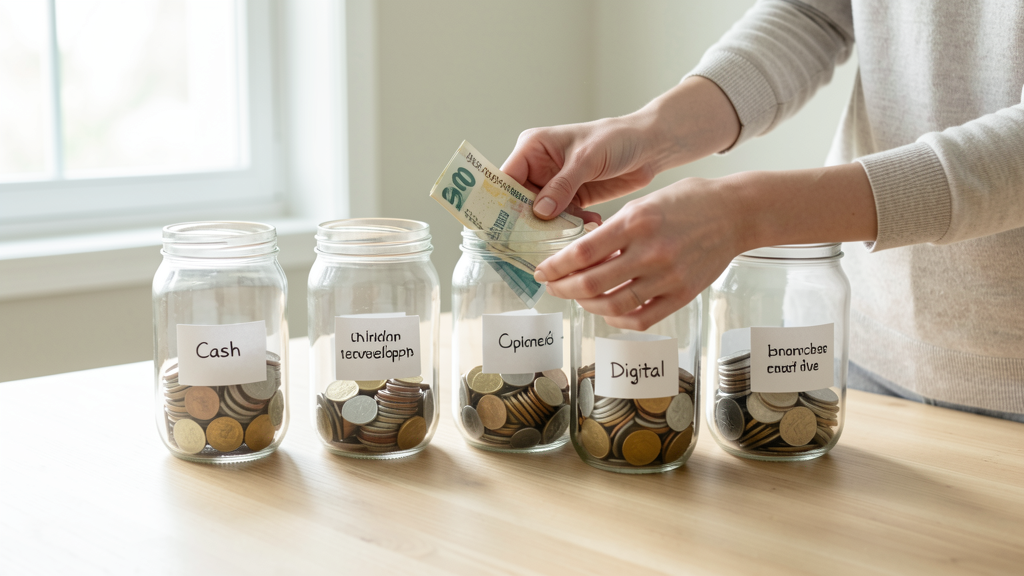
The mechanism is straightforward. You sit down at the start of the month and allocate specific amounts of cash to labeled envelopes—Groceries, Dining Out, Entertainment. If you allocated $200 for dining out and the envelope is empty on the 22nd, you stop eating out. There is no overdraft protection with cash. The constraint is absolute and immediate.
This method forces a trade-off that digital spending obscures. When you have to physically remove three twenty-dollar bills from your "Clothing" envelope to buy a shirt, you feel the weight of that sacrifice. You are instantly aware that this money is no longer available for the potential concert tickets next weekend. That high friction moment—the pause required to count the bills—is where the spending decision is truly made.
Why Invisible Spending Undermines Your Budget
Contrast the physical weight of money with the digital swipe or the "Buy Now" button. Digital payments decouple the consumption from the payment. When you use a credit card or a digital wallet, the payment occurs as an abstract deduction in a ledger that you might check days later. This reduces the pain of paying to almost zero.
Budgeting apps attempt to solve this by sending notifications or showing colorful charts of your spending. While data visualization is helpful, it relies on your willpower to check the app and interpret the data. By the time the app categorizes your morning latte and deducts it from your "Coffee" category, the dopamine hit from the caffeine has already faded, and the money is already gone.
Furthermore, digital tools often suffer from "leakage." Subscriptions, small in-app purchases, and auto-renewals can slip through the cracks because they require no active authorization. You might set a perfect budget in your app, but if you have saved your card details on a retail site, you can bypass your own rules with a single click. This is how 5 'Hidden' Budget Categories That Destroy 20% of Annual Income accumulate unnoticed, silently draining the potential for savings.

Operational Friction Is Your Friend, Not Your Enemy
One of the most common arguments against cash envelopes is the inconvenience. You have to go to the ATM, you have to carry bulky envelopes, and you have to ask for change. People view this as a flaw in the system. In reality, this friction is the system's greatest feature.
In a world optimized for speed, adding a 10-second pause to a transaction is a powerful disruptor. When you reach for your envelope and realize you only have two tens left for a purchase that costs twenty-five, you have to make a conscious choice. Do you put an item back? Do you dip into another envelope? Do you abandon the purchase? This moment of hesitation is rarely present with digital payments, where the transaction processes seamlessly regardless of whether you can actually afford it.
Digital apps optimize for convenience, which is often the enemy of restraint. They remove the "work" from spending. But spending should feel like work. It should require effort and consideration. If you are looking for a system that forces you to slow down and evaluate needs versus wants, the operational burden of cash is actually the asset you are missing.
When Digital Management Actually Wins
Despite the psychological superiority of cash, I am not suggesting you burn your credit cards or delete your banking apps. There are specific scenarios where digital tools are objectively superior. Fixed expenses are the prime example.
Your rent, mortgage, utilities, and insurance payments are consistent, usually automated, and offer no opportunity for impulse reduction. Paying your electric bill with cash does not make you consume less electricity; it just makes the process tedious. For these categories, digital automation is efficient and necessary. You can read more about structuring these fixed costs in my guide on How to Build a 'Priority-First' Budget When Your Income Varies.
Additionally, digital security is a valid concern. Carrying large amounts of cash makes you a target for theft and offers no fraud protection. If your envelope is lost or stolen, that money is gone forever. If your digital wallet is compromised, federal laws usually limit your liability. The most secure approach for large, infrequent purchases—like buying a plane ticket or paying for a car repair—is undoubtedly digital.
The Verdict: Choose the Method that Hurts
If we strip away the convenience and focus strictly on efficacy for cutting discretionary spending, the cash envelope system is the clear winner for the variable categories of your budget. It utilizes the natural human aversion to loss to curb consumption. The digital app is merely a historian; cash is a bouncer.
However, you do not have to go 100% analog to benefit from this psychology. A hybrid approach often yields the best results. Use your digital tools for the fixed bills and savings goals—perhaps using the trick of How I 'Tricked' Myself into Saving $400/Month by Renaming My Bank Accounts to automate the boring stuff. Then, switch to cash for the areas where you have the most trouble controlling yourself: groceries, dining out, and personal entertainment.
The goal of budgeting is not just to track where your money went, but to dictate where it goes before you even earn it. By reintroducing the tactile sensation of spending, you reintroduce the consequence. And consequences are what change behavior.
The Immediate Action Step
You do not need to overhaul your entire financial life today to test this theory. Select one problem category for the upcoming week—perhaps "Dining Out" or "Groceries." Go to your bank branch or ATM and withdraw your exact budgeted amount for that week in cash. Place it in an envelope or a separate compartment in your wallet. Leave your debit card at home when you go shopping for that specific category. When the cash runs out, stop spending in that category until the week resets. Observe how your decision-making process changes when the constraint is physical rather than theoretical.
Read next

Stop Guessing Your Monthly Income: The Priority-First Budget for Variable Earners
A strategic approach to handling fluctuating freelance income by prioritizing essential bills and percentage allocations instead of rigid dollar amounts.

5 'Hidden' Budget Categories That Destroy 20% of Annual Income
Discover the non-monthly expenses quietly draining your savings and learn exactly how to plug the leaks without buying a single app.